FREE SHIPPING ON ORDERS OVER £44FREE SHIPPING ON ORDERS OVER £44FREE SHIPPING ON ORDERS OVER £44FREE SHIPPING ON ORDERS OVER £44FREE SHIPPING ON ORDERS OVER £44FREE SHIPPING ON ORDERS OVER £44FREE SHIPPING ON ORDERS OVER £44FREE SHIPPING ON ORDERS OVER £44
Recovery Guide

Reflexology for
Recovery: Hands,
Feet and Temples

Reflexology is a centuries old practice built on focused pressure and touch. Whether you're new to it or already work it into your week, here's how it's traditionally applied to the hands, feet and temples, and how to bring it into your own recovery routine.

The Hands

The hands are the easiest place to start, because they're always with you. Work across the palms, fingers and the soft web spaces between them: press into the opposite palm with your thumb in small circles, then draw pressure down each finger from base to tip.

It takes a few minutes, needs no equipment, and can be done almost anywhere: at a desk, on a train, or in bed before sleep. That's why so many people keep hand reflexology as a quick reset during a busy day.
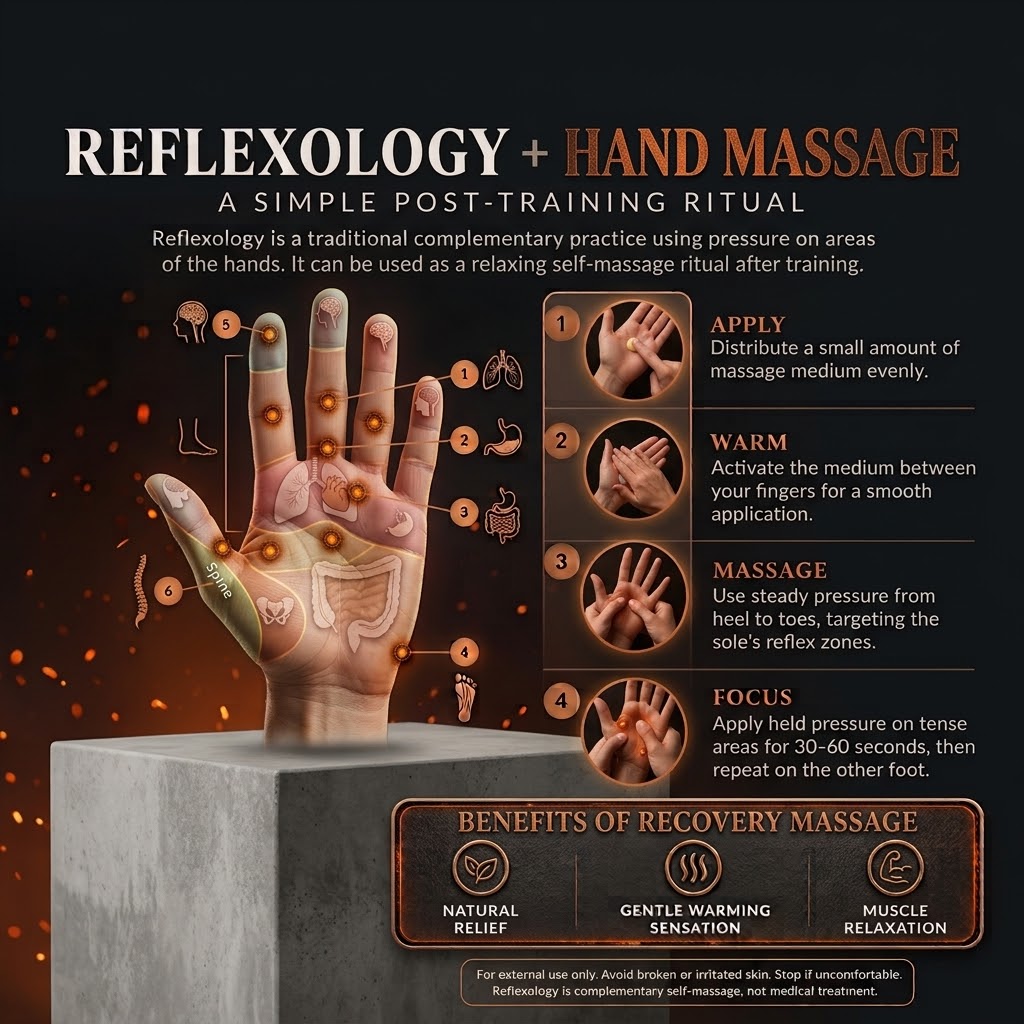
Reflexology and hand massage diagram: a hand reflexology map with a simple four step ritual after training

The Feet

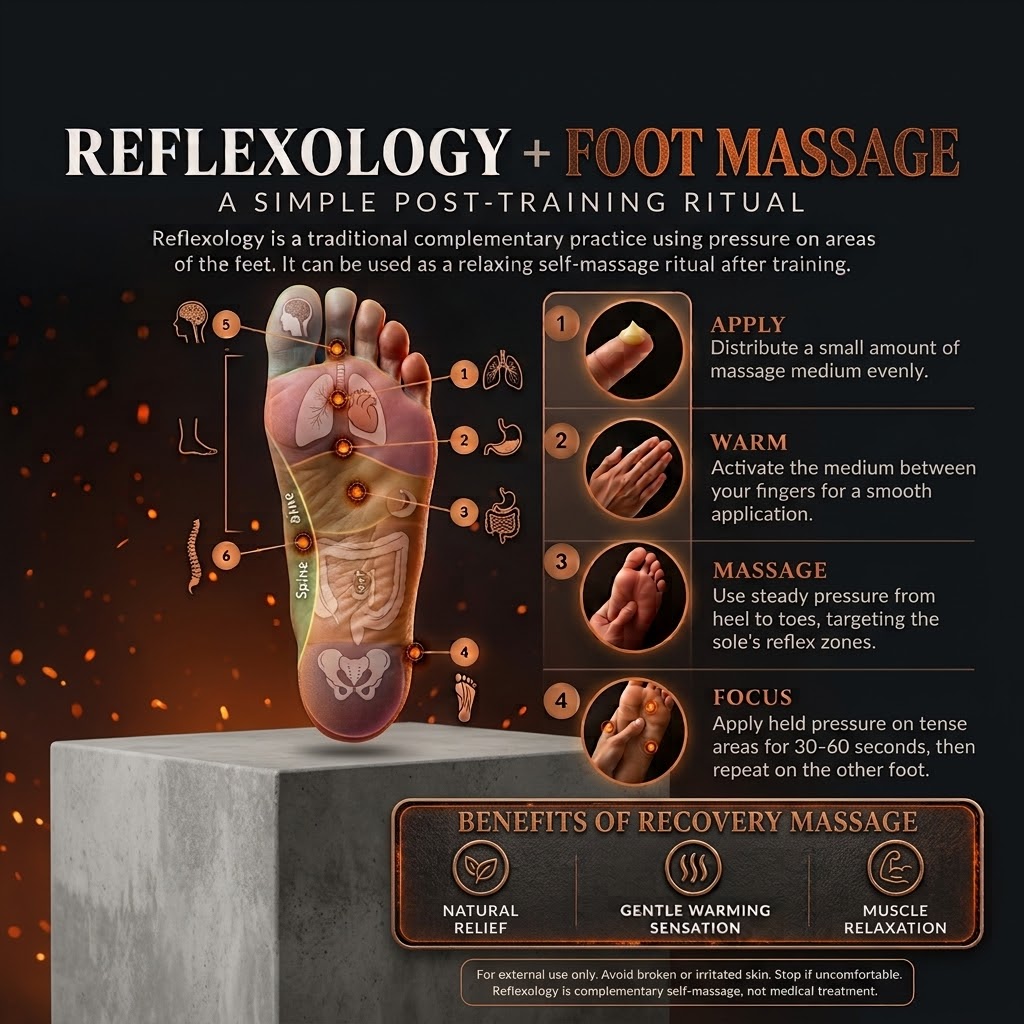
The feet are the most traditional area for reflexology, with roots in old Chinese and Egyptian practices. Work the whole sole and arch with the thumbs: long, firm strokes from heel to toes, then small circles across the ball, arch and heel, finishing on each toe.

It's often done at the end of the day, when your feet have carried the most load. Take one foot at a time, work slowly, and it becomes a ritual rather than a chore: the version most people picture when they hear the word reflexology.

Reflexology and foot massage diagram: a foot reflexology map with a simple four step ritual after training

The Temples

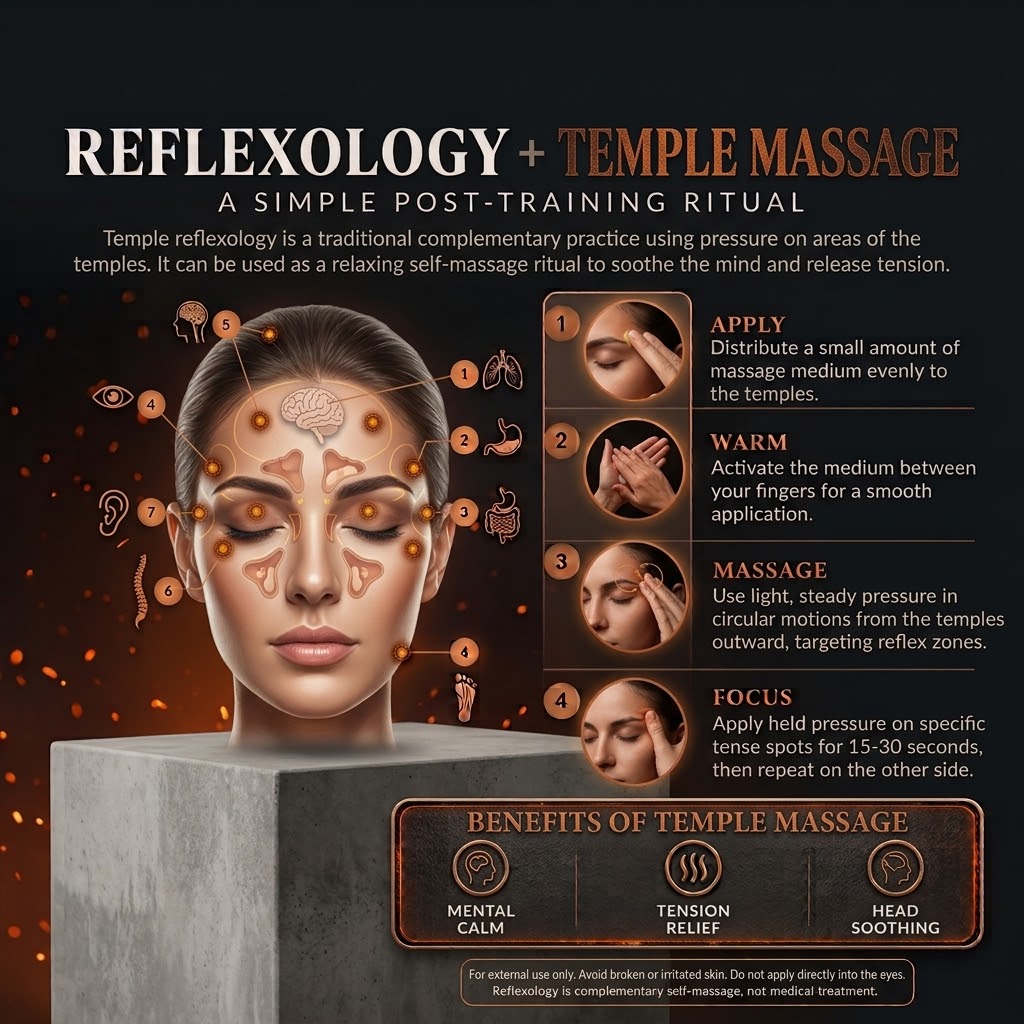
The temples call for a lighter touch. Rather than firm pressure, use small, slow circular motions with the fingertips, resting lightly against the skin just to the side of each eye.

People often reach for this during moments of tension: halfway through a demanding afternoon, or in the wind down before sleep. The area is sensitive, so keep it gentle; a minute or two is all that's needed.

Reflexology and temple massage diagram: facial reflex zones with a simple four step ritual

Pairing Reflexology with Dragon Tears and Ember Balm

Reflexology relies on touch and glide, so a bit of oil or balm helps rather than fighting dry skin. A warm soak with a few capfuls of Dragon Tears beforehand softens and relaxes the hands or feet, making the pressure points easier to work. Once you're dried off, Ember Balm gives your hands grip and a pleasant warmth for the massage itself.

A note of caution, the same as always with Ember Balm: use only a small amount near the temples, keep it well clear of the eyes, and avoid broken skin.

Ready to build
your own ritual?

Shop Dragon Tears and Ember Balm →